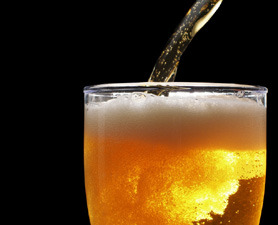
The term “big beer” typically refers to beers that have a higher gravity, or alcohol content, than most other beers. I will soon be reviewing Dogfish Head’s “World Wide Stout” and I thought I’d take the time to explain what it is that makes these beers so unique.
For reference, most beer ranges from 4-6% alcohol. Usually, the higher stuff, IPA’s and Belgian ales, will range from 7-12% alcohol. The big beers will range from 12-20% alcohol. Any higher is practically impossible using traditional methods. World Wide Stout is 18% alcohol.
Below is a very brief overview of how beer is made:
– Malted barley is boiled in water. This releases, among other things, sugar into the water creating what is called “wort.”
– Because of the sweetness of the wort, hops are added to tone down the sweetness and add some bitterness and flavor. Hops are responsible for the “bite” that some beers have.
– Finally, the most important ingredient, yeast. Yeast determines whether a beer is a lager or an ale and, for purposes of this discussion, how much alcohol is in a beer.
Yeast is a living organism and, much like you and I, consume and create waste. The waste that yeast expels however, unlike you and I, is actually useful. Yeast consumes the sugar in the wort and expels CO2 and ethanol (alcohol) in it’s place. Thus, a carbonated, alcoholic drink! Once the yeast is added, it’s left to do it’s thing for about 2 weeks on average.
So how do you increase the alcohol content of a beer? The obvious answer is add more sugar and yeast. So, more malts = more sugar + more hops to balance out the sugars + more yeast to eat up all the sugar = more alcohol!
So how much more malts and hops are needed for the big beers? Dogfish Head’s 120 Minute IPA has the highest alcohol content of any other IPA at 18%. Dogfish has explained that for them to brew 120 Minute, they need “over 7 times the volume of malt and over 30 times the volume of hops than your average light lager.” Not only that, it is also “aged over 5 times longer than the average ale.”
To make these beers, it’s not just as simple as adding more ingredients either. It’s also very difficult to do so as well. Remember, ethanol is a waste product of yeast. Much like how neither you or I could live in a house of our own waste, ethanol is toxic to yeast. Meaning in high alcohol environments, yeast dies off rather than eating more sugar and creating more alcohol. This is why creating a beer thats over 20% alcohol is nearly impossible using traditional methods. There has to be a balance between the sugar, yeast, and alcohol.
More ingredients, higher difficulty level and longer time to complete the fermentation period mean that these are very expensive beers to make. For Dogfish Head to produce 120 Minute IPA it costs them half a million dollars! It is likely the same cost for their other big beers. For the single 12 oz bottle of World Wide Stout, Ho Foods (Whole Foods) charged me $10. Compare that to the usual $10-12 it’s costs for any other micro-brewed six pack.
That is why the big beers are so rare, expensive and unique. Few breweries can afford to take the risk of producing something of this caliber. Last year, Dogfish Head had to dump their productions of 2 of their big beers due to the lack of continued fermentation. This cost the company almost a million dollars in lost profits.
I’ve never personally tried any of Dogfish Heads big beers so I am very excited to try out the World Wide Stout that I purchased!
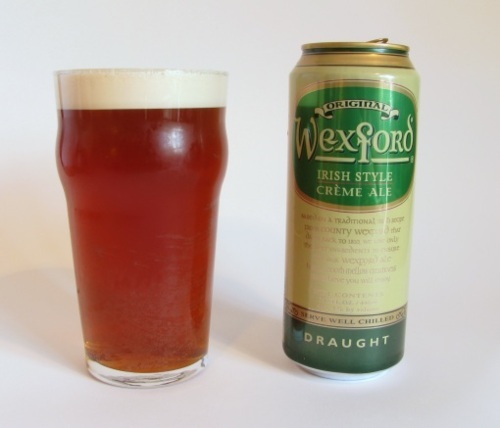
By no means a complete review, I had this beer recently at Todd English P.U.B. and it was unlike anything I have had before.This was a very smooth and creamy beer. Very little carbonation, similar texture to a Guinness, however it is clearly not as dark of a beer. The above image looks a little redder than what I had (I had it on tap) but it was equally opaque. Apart from the incredibly smooth texture, the taste is another standout feature of this ale. This beer has a strong vanilla taste, similar to a cream soda. It is not overtly sweet, it is equally balanced between the vanilla taste and the light carmel malts. Between the texture and taste, there is no other way to describe this other than a well balanced, smooth, creamy ale. Despite the mixed reviews on BeerAdvocate, (here) I definitely recommend trying this out and I will be looking for a retailer around town that sells it!
Type: Pale Ale
ALC/VOL: 6.1%
Color: Golden yellow, slight orange tint
Smell: Smells citrusy, orange/lemon type of citrus. Little bit of a wheat tone as well.
Feel: smooth, medium carbonation
Taste: Little bit of an apple juice taste, some honey overtones. Other than that, there’s not much. In my mind, Sierra Nevada makes the standard pale ale. In comparison to that, this beer lacks in hoppy bite and doesn’t have much of a flavor. It’s very simple, seems like it’s related to the big 3 American beers. This definately has more taste and hops than those beers, but it’s still a very simple taste.
Overall: Meh. I’m not exactly sure what to say. It’s not bad, not great though. Since receiving these beers, I’ve noticed that the Ho Foods (Whole Foods) near me sells beers from this brewery but compared to the rest of their selection, I can’t say that this would be on the top of my list.
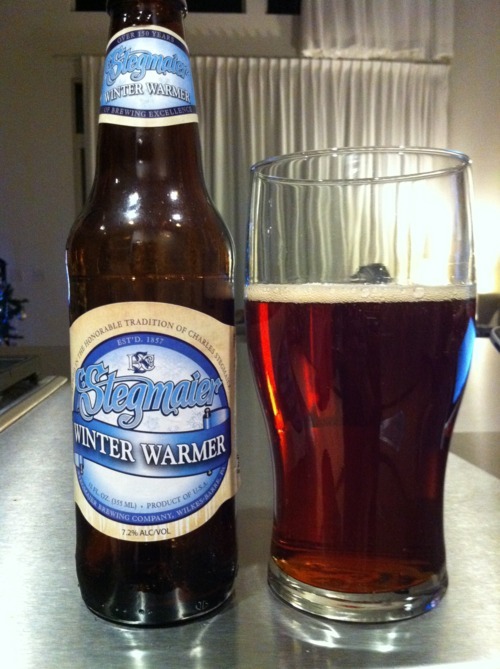
ALC/VOL: 7.2%
Color: Amber/brown with reddish hue
Smell: This beer smells very fruity, primarily grapefruit citrus with apple and lightly spiced with cinnamon. Maple syrup makes up the sweet sugary smell.
Feel: This feels very smooth and crisp. Not overly carbonated or bubbly.
Taste: Primarily a well balanced brown ale. Not overly spiced and seasoned like most winter beers. If it weren’t named Winter Warmer, it could very easily be a year round brew similar to Fat Tire or Moose Drool. The bitterness is moderate with a strong malty flavor. It tastes almost like a cinnamon apple pie. The grapefruit aroma is also present in the overtones of this beer. The aftertaste has a short hoppy bite with strong taste of alcohol finishing it off. Overall: A very tasty beer from a brewery over 150 years old, that I’ve never heard of. After tasting this, I’m looking forward to also trying out their IPA that I also received. As mentioned earlier, this is more of an every day beer as opposed to a strict winter ale. Definitely worth drinking in my opinion.
For Christmas, the wife and I received a beer of the month subscription from our BFF, Emily.
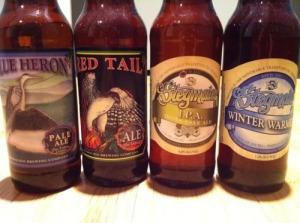
We received our first shipment this week. 12 beers, 4 different types from 2 different breweries. The club is meant to introduce people to beer from small breweries in the country that only distribute locally. Not surprisingly, I’ve never heard of either brewery I received this month.
Mendocino Brewery is based in California and has been brewing beer since the 80’s. The extent of their success is mostly winning a few awards at California state fairs.
Second, Stegmaier Brewery is based in Pennsylvania. This company was founded in the mid 1800s by a German immigrant. Needless to say, I’m a bit more excited to try this brewer’s beer.
I’ve never written a beer review before. I’m going to start by trying to review all of the beers I receive from my 3 month subscription. This should be interesting…
George Jean Nathan
Benjamin Franklin
side note – He didn’t actually say this exact quote. From what I remember, he was talking about wine, and it was worded quite a bit differently.
Oscar Wilde
I read several articles today relating alcohol to health:
http://goo.gl/xcdp – Beer contains nutrients that make bones stronger and it is suggested that moderate drinking will reduce the risk of osteoporosis and other diseases
http://goo.gl/WbWe7 – Red wine prevents cavities.
The above articles are related to the chemistry of alcohol. The below articles are a bit more vague:
http://goo.gl/pbUFq – People who drink more, are more likely to exercise longer and more intensely.
http://goo.gl/2I7T9 – Women were monitored for 13 years. The non drinkers gained the most weight, the moderate drinkers gained the least weight
These articles, on their own don’t offer much of an answer. But then there’s this article:
http://goo.gl/LAQh – People with higher intelligence drink more than those with a lower intelligence.
I think that because those that drink typically have a higher intelligence, they are also more likely to have the knowledge to want to keep themselves healthy and in shape. But then the real question is, why is there a correlation between intelligence and alcohol consumption?
“An intelligent man is sometimes forced to be drunk to spend time with fools.”
—Ernest Hemingway
Or, it could just be that those with intelligence have a taste for the finer things in life, like a glass of red wine or a pint of craft beer!